
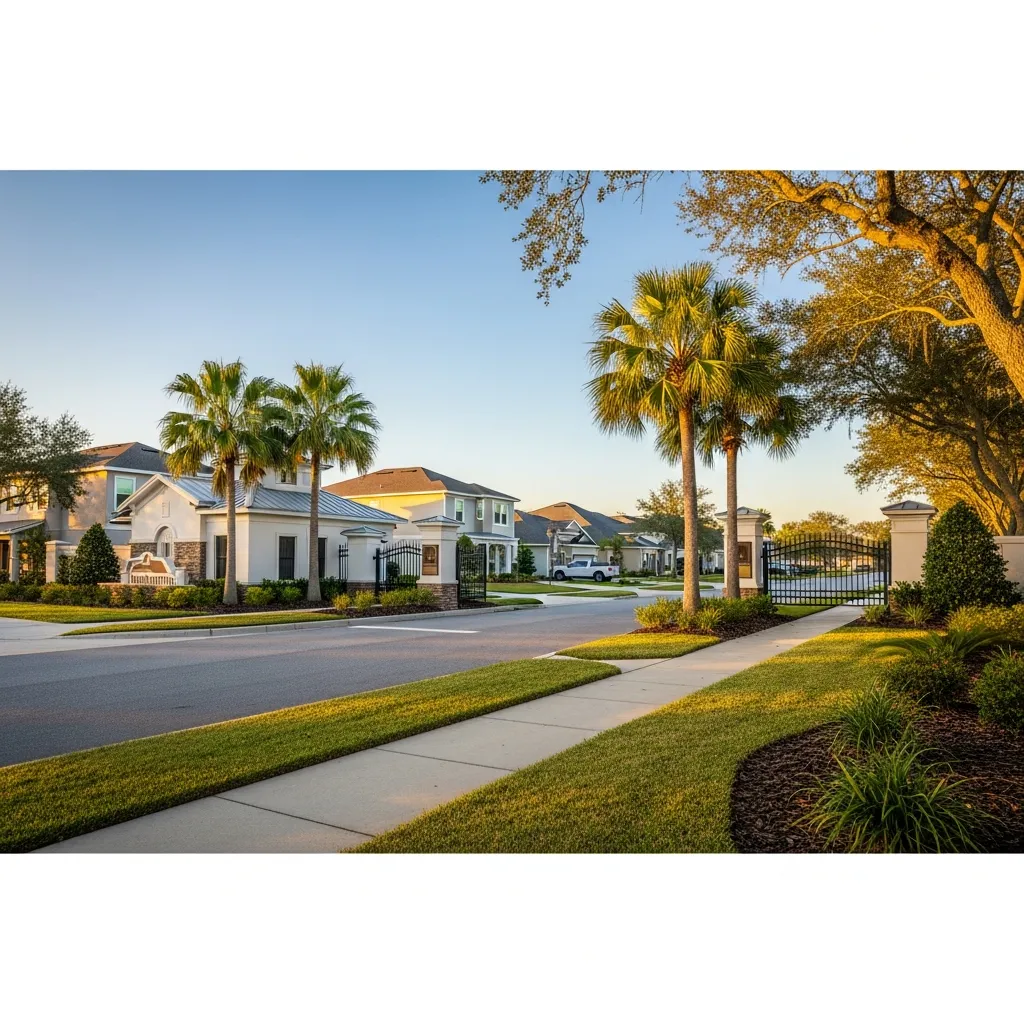
What to Know Before Buying in a CDD Community in Northeast Florida
If you are looking at newer homes or master-planned communities in Northeast Florida, you will probably come across the term CDD.
For many buyers, CDD fees are confusing at first. They may show up in tax estimates, listing details, builder conversations, or lender numbers, but buyers are not always sure what they are actually paying for or how those fees affect the true cost of the home.
This matters because a CDD can change your monthly payment, your long-term cost of ownership, and how you compare one community to another.
A home with a lower purchase price may not always have the lower monthly cost. A home with a higher price but lower fees may sometimes be more competitive than it looks. A new construction community with beautiful amenities may carry extra costs that need to be understood before you fall in love with the model home.
If you are buying in Northeast Florida, especially in St. Johns County or other growing areas, here is what you should know before buying in a CDD community.
What is a CDD?
CDD stands for Community Development District.
In Florida, a CDD is a special-purpose local government structure often used in planned communities to fund, build, operate, or maintain infrastructure and community improvements.
That may include things like:
Roads
Drainage
Utilities
Stormwater systems
Entry features
Landscaping
Parks
Trails
Community pools
Amenity centers
Recreation areas
Other community improvements
The exact purpose and cost depend on the specific district.
A CDD is not the same thing as an HOA, although a community may have both.
That is one of the first things buyers need to understand.
CDD fees and HOA fees are different
A homeowners association, or HOA, typically manages community rules, common-area maintenance, architectural guidelines, and certain neighborhood services.
A CDD is different. It is usually tied to infrastructure, amenities, and district-level costs.
Some communities have:
HOA only
CDD only
Both HOA and CDD
Multiple assessments or fee structures
This is why buyers should not compare homes using only the sale price.
You need to know the full monthly cost.
That includes mortgage, taxes, insurance, HOA fees, CDD assessments, flood insurance if applicable, and expected maintenance.
A community with strong amenities may still be worth the cost, but you should understand what you are paying for.
How CDD fees usually show up
CDD assessments are often included on the property tax bill as a non-ad valorem assessment.
That means the fee may be collected with the tax bill, but it is not the same thing as regular property tax based on assessed value.
For buyers, this can be confusing because the CDD may not always feel obvious in the listing price. It may be discussed separately or appear in estimated monthly payments.
Before making an offer, ask:
Is there a CDD?
What is the annual CDD amount?
Is it included in the property tax estimate?
Is there a bond portion?
Is there an operations and maintenance portion?
Can any portion increase?
How long does the bond run?
Can the bond be paid off?
What does the CDD cover?
Are there other special assessments?
Do not rely only on assumptions or neighborhood reputation. Verify the cost for the specific property.
Why CDDs exist
Many newer communities require major infrastructure before homes can be built and sold.
Roads, utilities, drainage systems, stormwater ponds, recreation areas, landscaping, and amenities all cost money. A CDD is one way that infrastructure can be financed and maintained over time.
For buyers, the trade-off can be fairly simple: you may get access to newer community infrastructure and amenities, but you may also pay an additional assessment to support them.
That does not make a CDD good or bad.
It makes it something to understand.
CDD fees can affect affordability
A CDD can affect how much home you can comfortably afford.
Even if the purchase price fits your budget, the full monthly payment may change once you include the CDD assessment.
For example, two homes may both be listed at a similar price, but one may have a higher total monthly cost because of CDD and HOA fees. Another home may have a higher price but lower fees, making the monthly payment closer than expected.
This is why buyers should compare the complete cost, not just the list price.
When looking at homes, compare:
Purchase price
Estimated taxes
CDD amount
HOA amount
Insurance estimate
Mortgage payment
Total monthly payment
Maintenance expectations
Community amenities
Long-term fit
The right home is not always the one with the lowest list price. It is the one that makes sense financially and fits how you want to live.
CDD fees may vary by neighborhood and property
Not all CDD fees are the same.
Fees may vary by community, district, lot size, home type, phase, or bond structure. One neighborhood may have a different assessment than another nearby neighborhood. Even within a larger master-planned community, the numbers may not be identical.
This is especially important in Northeast Florida, where buyers may be comparing communities like Nocatee, SilverLeaf, Rivertown, World Golf Village-area neighborhoods, and other newer developments.
Some communities may advertise no CDD fees. Others may have CDD fees that support major amenities and infrastructure. Some older phases may have different structures than newer phases.
Always verify the actual cost tied to the specific address.
A CDD is not automatically a reason to avoid a community
Some buyers hear “CDD” and immediately think they should avoid the home.
That is not always the right conclusion.
A CDD may help fund amenities, infrastructure, roads, landscaping, stormwater systems, and other improvements that support the community experience. If you value those features and use the amenities, the cost may feel worthwhile.
For some buyers, a CDD community may offer:
Newer homes
Planned amenities
Sidewalks and trails
Community pools
Parks
Sports courts
Attractive landscaping
Organized development
Long-term community maintenance
The question is not whether a CDD is automatically bad.
The question is whether the total cost makes sense for your household.
A no-CDD community is not automatically cheaper
The opposite can also be true.
A community with no CDD fees is appealing, but no CDD does not automatically mean the home is cheaper overall.
The home price, HOA fees, taxes, insurance, and maintenance costs still matter. A no-CDD community may have a higher purchase price, different HOA structure, or fewer amenities.
You need to compare the whole picture.
A home with a CDD could still be a better fit than a no-CDD home if the location, amenities, condition, and monthly payment work better for your needs.
A no-CDD home could be a better fit if you want fewer ongoing fees and do not need a large amenity package.
There is no universal answer.
CDDs and new construction
CDD fees often come up when buyers are looking at new construction.
Builder communities may include impressive amenities, attractive streetscapes, planned parks, trails, pools, clubhouses, and future commercial areas. Those features can be part of the appeal, but the cost structure should be reviewed carefully.
Before signing a new construction contract, buyers should ask:
What is the current CDD amount?
Is the amount estimated or final?
What does the CDD cover?
Does the builder provide a full breakdown?
Are there future phases that may affect the community?
Are amenities already built or planned?
What is the HOA amount?
How will the CDD and HOA affect the monthly payment?
Are there additional fees at closing?
Can the CDD bond be paid off?
A model home may be beautiful, but the monthly cost has to make sense after every fee is included.
CDDs and resale homes
CDD fees also matter when buying resale homes.
In some cases, a resale home may still have a CDD assessment. In other cases, a bond portion may be reduced or paid off, depending on the community and property. Buyers should verify this instead of assuming.
When comparing resale homes, ask:
Is there still a CDD balance?
How much is the annual assessment?
Has any portion been paid down?
Does the seller have documentation?
How does the fee compare to nearby homes?
Does the home’s price reflect the fee structure?
Are amenities and infrastructure still maintained well?
This is another reason the exact property matters.
CDD fees can affect resale
A CDD can also affect future resale.
Some future buyers may be comfortable with the fee because they value the community and amenities. Others may be more payment-sensitive and compare the total monthly cost against nearby communities.
This does not mean a CDD hurts resale automatically. Many CDD communities remain very desirable.
But buyers should understand that the fee structure becomes part of the value conversation later.
A future buyer will likely compare:
Home price
Monthly payment
HOA and CDD costs
Amenities
Location
School zoning
Condition
New construction competition
Community reputation
Insurance costs
If the community offers strong value and amenities, the CDD may be accepted as part of the lifestyle. If the fee feels high relative to the benefits, buyers may hesitate.
Questions to ask before buying in a CDD community
Before buying in a CDD community, ask these questions:
What is the annual CDD assessment?
Is it included in the tax estimate?
Is there a bond portion?
Is there an operations and maintenance portion?
Can either portion increase?
When does the bond mature?
Can the bond be paid off?
What amenities or infrastructure does it support?
Are amenities already built or still planned?
What is the HOA fee?
What does the HOA cover?
Are there any additional assessments?
How does the total monthly cost compare to nearby communities?
How does the fee affect resale?
These questions can help you avoid surprises.
How to compare homes with and without CDD fees
When comparing homes, create a true monthly cost comparison.
Do not just compare list price.
For each home, look at:
Estimated mortgage payment
Property taxes
CDD assessment
HOA fee
Insurance
Flood insurance, if applicable
Expected maintenance
Commute costs
Amenity value
Condition
Location
Long-term fit
This is where the decision becomes clearer.
A buyer may realize that a home with a CDD is still the best fit because the community, amenities, and location are worth it.
Another buyer may decide they prefer fewer fees and a simpler cost structure.
Both decisions can be right depending on the buyer.
My practical take
CDD fees are not something to fear, but they are something to understand.
In Northeast Florida, many desirable communities include some type of fee structure tied to amenities, infrastructure, or community maintenance. That can be part of what makes the community appealing.
The key is making sure the total cost works for you.
Before buying, verify the exact CDD amount, understand what it covers, compare it with HOA fees and taxes, and look at the full monthly payment.
A smart buying decision is not based only on the home’s price.
It is based on the full cost, the lifestyle, and the long-term fit.
FAQs
What does CDD mean in Florida real estate?
CDD stands for Community Development District. It is a special-purpose local government structure often used to finance, operate, or maintain infrastructure and community improvements in planned communities.
Is a CDD the same as an HOA?
No. An HOA typically manages community rules and certain common-area responsibilities. A CDD is usually tied to infrastructure, amenities, and district-level assessments. Some communities have both.
Are CDD fees paid monthly?
CDD assessments are often included on the property tax bill, but lenders may account for them in the monthly escrow payment. Buyers should verify how the fee affects their specific monthly payment.
Can CDD fees go away?
It depends on the district and assessment structure. Some bond portions may have a payoff or maturity date, while operations and maintenance assessments may continue. Buyers should verify the exact structure for the property.
Should I avoid homes with CDD fees?
Not automatically. A CDD may support amenities and infrastructure that add value to the community. The real question is whether the total monthly cost and lifestyle fit your goals.
If you are buying in Northeast Florida, especially in a newer or master-planned community, do not compare homes by price alone. Review the full monthly cost, including HOA fees, CDD assessments, taxes, insurance, and maintenance, so you can choose the home and community that truly fit your plan.
Source: Florida Community Development District public information; local Northeast Florida buyer and new construction context as of July 2026.