
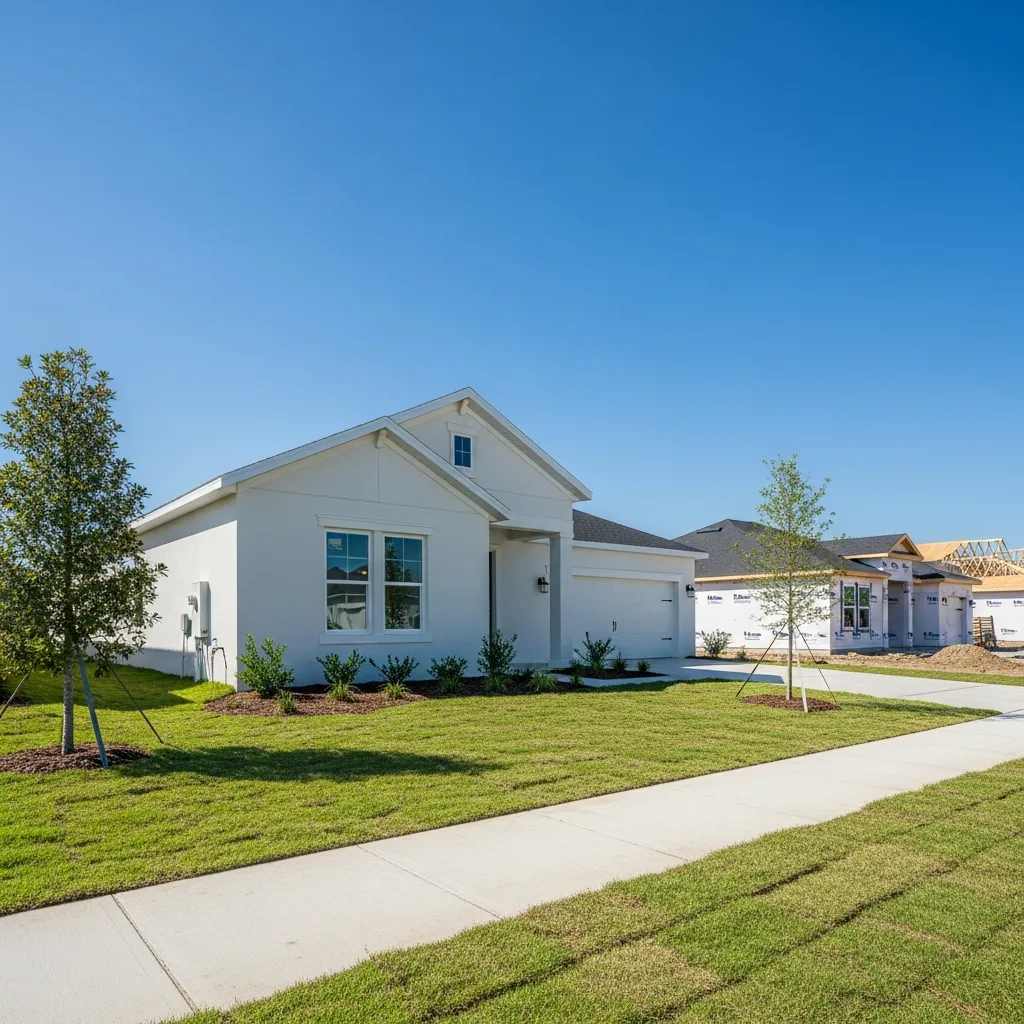
New Construction in Northeast Florida: Builder Incentives, Timelines, and Buyer Representation
New construction is a major part of the Northeast Florida real estate conversation, especially in areas like St. Johns County, northern St. Augustine, Nocatee, SilverLeaf, Rivertown, World Golf Village, Clay County, and growing parts of Jacksonville.
For many buyers, the idea of a brand-new home is appealing. You may get a modern floor plan, energy-efficient systems, current finishes, builder warranties, and fewer immediate maintenance concerns than you might have with an older resale home.
But new construction is not automatically simpler.
Builder incentives, preferred lenders, design choices, timelines, inspections, lot premiums, HOA fees, CDD fees, and contract terms can all affect whether the home is truly the right fit.
If you are thinking about buying new construction in Northeast Florida, here is what you should understand before walking into a model home or registering with a builder.
New construction can be a great option, but it is still a real estate purchase
One of the biggest mistakes buyers make with new construction is assuming the process is more straightforward than buying a resale home.
In some ways, it can feel easier. The home is new. The builder has sales representatives on-site. The model home looks polished. The community may have attractive amenities, brochures, renderings, and incentives.
But behind the scenes, there are still major decisions to make.
You are still buying real estate. You are still signing a contract. You are still making a financial commitment. You are still choosing a location, lot, floor plan, builder, timeline, and long-term lifestyle.
The builder’s sales team can be helpful, but they represent the builder. Their role is to sell the builder’s homes and explain the builder’s process. That is not the same thing as having someone guide you through the decision from your side.
That difference matters.
Builder incentives can be valuable, but they need to be understood
Builder incentives are one of the biggest reasons buyers look at new construction right now.
Depending on the builder, community, inventory, and time of year, incentives may include:
Closing cost contributions
Mortgage rate buydowns
Design center credits
Appliance packages
Flex dollars toward upgrades
Price reductions on quick move-in homes
Reduced deposits
Special financing through a preferred lender
These incentives can be very valuable, especially when affordability is tight. A rate buydown or closing cost contribution may make a home more realistic for a buyer’s monthly payment.
But the incentive should never be reviewed in isolation.
Buyers should ask:
Is the incentive tied to using the builder’s preferred lender?
Is the rate temporary or permanent?
What happens after a temporary buydown expires?
Is the purchase price still competitive?
Are the closing costs higher than expected?
Are upgrade prices marked up?
Is the incentive available only on certain homes?
Does the timeline work for your move?
Is the home still a good fit without the incentive?
A large incentive can feel exciting, but the real question is whether the full deal makes sense.
Preferred lenders can be helpful, but compare the full picture
Many builders offer incentives when buyers use the builder’s preferred lender or affiliated title company.
That does not automatically mean the preferred lender is bad. In some cases, the builder’s lender may offer a competitive package, especially if the incentive is strong. But buyers should still compare the full loan estimate and understand the terms.
Look beyond the advertised rate.
Compare:
Interest rate
APR
Points
Lender fees
Closing costs
Length of rate lock
Whether the rate is temporary or permanent
Required down payment
Cash needed to close
Monthly payment after taxes, insurance, HOA, and CDD fees
What happens if construction is delayed
The lowest advertised payment does not always mean the best long-term structure.
If a builder incentive is tied to financing, it is worth taking the time to understand what you are actually receiving.
Quick move-in homes and build-from-scratch homes are different decisions
Not all new construction purchases work the same way.
A quick move-in home, sometimes called an inventory home or spec home, is already under construction or nearly complete. These homes may offer stronger incentives because the builder wants to close them within a certain timeframe.
A build-from-scratch home gives you more ability to choose the lot, floor plan, structural options, design selections, and finishes. But it usually comes with a longer timeline and more decisions.
Both options can be good.
A quick move-in home may work well if:
You need to move sooner
You want a clearer closing timeline
You like the selections already chosen
The builder is offering strong incentives
You want less decision fatigue
A build-from-scratch home may work well if:
You want more personalization
You are not in a rush
You care deeply about lot choice
You want specific structural or design options
You are comfortable with a longer construction timeline
The better choice depends on your priorities, timing, budget, and tolerance for uncertainty.
Timelines can change
New construction timelines are estimates, not guarantees.
Weather, permitting, labor, materials, inspections, utility connections, supply chain issues, and builder workload can all affect timing. Even when everything goes well, delays can happen.
This matters because your timeline affects many other decisions.
If you are renting, when does your lease end?
If you are selling another home, when do you need to close?
If you are relocating, when do you need to be in Northeast Florida?
If children are starting school, when do you need to be settled?
If your rate lock expires, what happens financially?
A new construction buyer should always understand the timeline risk before signing.
The goal is not to expect problems. The goal is to avoid being surprised by them.
Lot choice matters more than buyers sometimes realize
The floor plan gets a lot of attention, but the lot can have a major impact on daily life and long-term value.
Before choosing a lot, buyers should consider:
Lot premium
Road noise
Drainage
Grading
Preserve or water views
Neighboring lots
Future construction nearby
Community amenities
Traffic patterns within the neighborhood
Sun exposure
Easements
Fences and restrictions
Backyard usability
Future resale appeal
A beautiful model home can make every floor plan feel exciting, but the lot is what determines how that home actually lives in that location.
Do not rush the lot decision.
Model homes are designed to sell the dream
Model homes are supposed to look amazing. That is their job.
They often include upgraded flooring, lighting, cabinetry, countertops, trim, built-ins, appliances, landscaping, window treatments, and designer furniture. The model may also have structural options that are not included in the base price.
That does not mean anything is wrong. It simply means buyers need to understand what is standard, what is optional, and what the real price will be after selections.
Before falling in love with a model, ask:
What is included in the base price?
What upgrades are shown in the model?
What structural options were added?
What would this model cost as shown?
What design center allowance is realistic?
What finishes are standard?
Which upgrades are most important for resale?
Which upgrades can be done later?
A model home can be helpful, but it should not be confused with the base version of the home.
Design center decisions can add up quickly
The design center is where many buyers realize the final price can change.
Some buyers start with a base price and then add thousands, or tens of thousands, in upgrades. Flooring, cabinets, countertops, tile, lighting, electrical options, plumbing fixtures, built-ins, appliances, and exterior selections can all affect the final number.
That does not mean you should avoid upgrades. Some are worth considering. But buyers should be strategic.
Focus first on things that are difficult or expensive to change later, such as:
Structural options
Additional rooms or extensions
Ceiling height
Electrical placement
Plumbing rough-ins
Kitchen layout
Cabinet configuration
Flooring throughout main areas
Shower layout
Outdoor living options
Cosmetic items can often be updated later. Structural items may not be as easy.
Inspections still matter with new construction
A brand-new home should still be inspected.
New does not mean perfect. Construction involves many trades, many steps, and many opportunities for small issues to be missed. Even good builders can have items that need correction before closing.
Depending on the situation, buyers may consider:
Pre-drywall inspection
Final inspection before closing
Blue tape or walkthrough punch list
11-month warranty inspection before the builder warranty period expires
Common issues can include grading, drainage, roof details, HVAC installation, plumbing items, electrical items, window or door adjustments, attic insulation gaps, appliance installation, cosmetic defects, or incomplete punch list items.
A new home inspection is not about assuming something is wrong. It is about protecting the buyer and making sure the home is delivered as expected.
Buyer representation still matters with builders
Some buyers wonder whether they need representation when buying from a builder.
The short answer: it can still be extremely valuable.
A buyer’s agent can help you think through:
Which communities fit your lifestyle
How builder pricing compares with resale options
Whether incentives are actually meaningful
What questions to ask before signing
How to compare monthly costs
What fees apply
What contract timelines mean
When inspections may be appropriate
How to think about resale potential
Whether the lot, plan, and community support your long-term goals
The builder’s representative can explain the builder’s homes and process. A buyer’s representative can help you evaluate whether that builder, home, lot, contract, and community are the right fit for you.
Those are different roles.
Registering with the builder matters
This is important: if you want representation, it is best to have your agent involved before your first builder visit or online registration.
Many builders have registration rules. If you walk into a sales office or submit an online inquiry without your agent, it may affect whether your agent can be included later.
Before visiting model homes, ask your agent to register you or go with you. It is a simple step, but it can matter.
Even if you are “just looking,” it is better to set things up correctly from the beginning.
HOA and CDD fees should be part of the decision
In Northeast Florida, especially in newer communities, HOA and CDD fees can be a major part of the monthly cost.
A CDD, or Community Development District, is often used to fund infrastructure and community improvements. It can show up as part of the tax bill and affect the buyer’s monthly payment.
Before choosing a new construction home, buyers should understand:
HOA amount
CDD amount, if applicable
What the fees cover
Whether fees can increase
Community rules and restrictions
Amenity access
Future phases of development
Maintenance responsibilities
A home may look affordable based on the sale price, but the full monthly cost tells the real story.
Future build-out can affect your lifestyle
When buying in a newer or growing community, it is important to understand what the area may look like in the future.
Ask questions like:
How many total homes are planned?
What phases are still under construction?
Where will future roads go?
Are more amenities planned?
Are commercial areas planned nearby?
Will there be ongoing construction near the home?
What lots around you are still undeveloped?
Are schools, parks, or infrastructure planned?
How long is the build-out expected to take?
Future growth can be a benefit, but it can also affect traffic, noise, convenience, and resale competition.
New construction versus resale is not always an obvious choice
A buyer considering new construction should also compare resale homes.
A resale home may offer:
A more established neighborhood
Mature landscaping
A larger lot
A better location
More room to negotiate
Existing window treatments, appliances, or fencing
A clearer view of the neighborhood as it already exists
A new construction home may offer:
Modern layout
New systems
Builder warranty
Energy efficiency
Design choices
Builder incentives
Lower near-term maintenance needs
Neither option is automatically better.
The right choice depends on total cost, condition, location, timeline, lifestyle, and long-term fit.
My practical take
New construction can be a great opportunity in Northeast Florida, especially for buyers who want a modern home, builder incentives, and access to growing communities.
But buyers should not let the excitement of a model home or an advertised incentive replace a clear strategy.
The best decisions come from comparing the full picture: price, incentives, financing, fees, lot, timeline, inspections, contract terms, future development, and resale potential.
A new home is still a major investment. It deserves the same level of thought as any other real estate decision.
FAQs
Do I need a real estate agent when buying new construction?
You are not required to have one, but buyer representation can be valuable. The builder’s sales representative works for the builder. A buyer’s representative helps you evaluate the builder, contract, incentives, timeline, fees, and long-term fit from your side.
Should I bring my agent before visiting a model home?
Yes. If you want representation, it is best to involve your agent before your first builder visit or online registration. Many builders have registration policies that can affect whether your agent can be included later.
Are builder incentives always a good deal?
Not always. Incentives can be valuable, but buyers should review the full price, financing terms, closing costs, fees, and whether the incentive is tied to a preferred lender or specific home.
Should I get an inspection on a brand-new home?
Yes. New homes can still have construction defects, incomplete items, or installation issues. Many buyers consider pre-drywall, final, and 11-month warranty inspections.
What should I compare before choosing new construction?
Compare the full monthly payment, HOA and CDD fees, lot, location, timeline, builder reputation, warranty, incentives, contract terms, and resale potential.
If you are considering new construction in Northeast Florida, start before you walk into the model home. Compare communities, understand the full monthly cost, review the builder’s process, and make sure the home supports your long-term plan.
Source: National Association of REALTORS® 2026 new-home market reporting; NewHomeSource Jacksonville/St. Augustine area builder promotion data; local Northeast Florida new construction market context as of July 2026.