
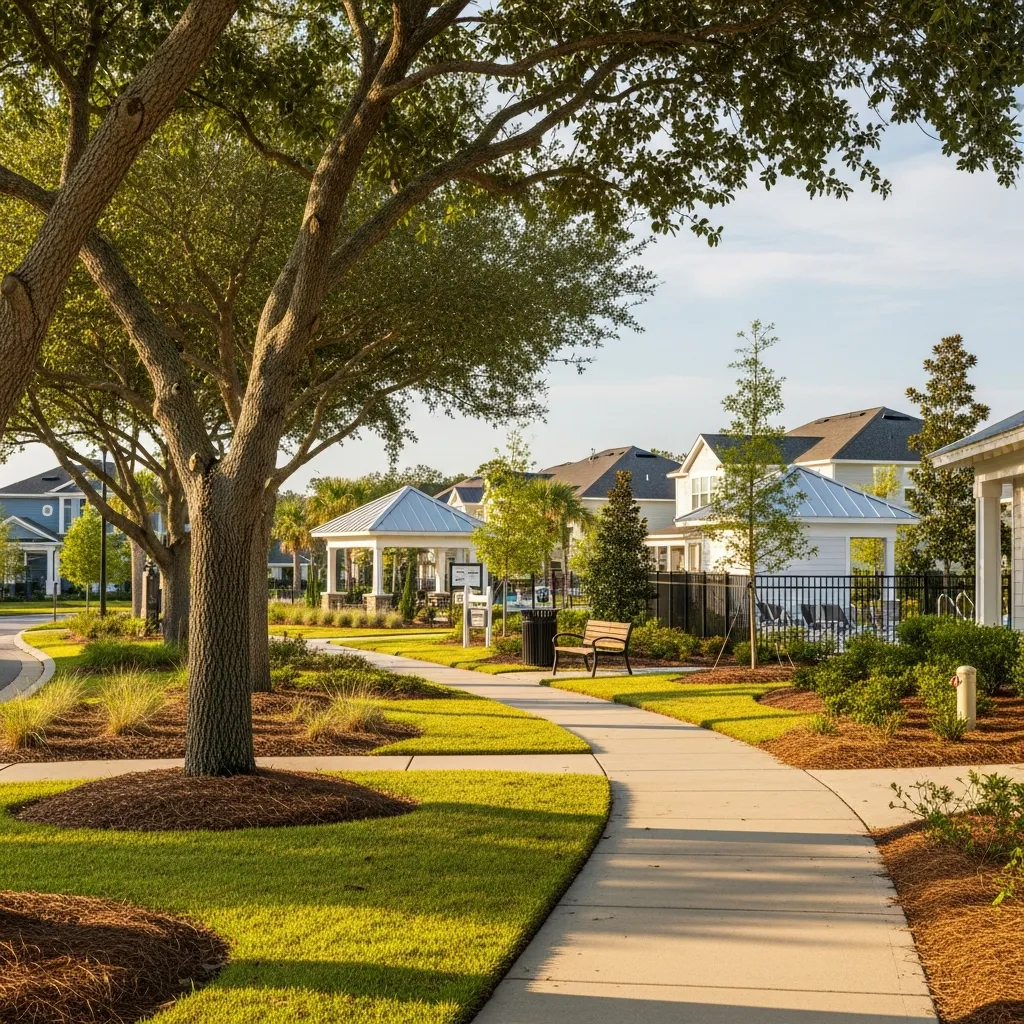
Are CDD Fees Worth It? What Northeast Florida Buyers Should Understand
CDD fees can be one of the most confusing parts of buying a home in Northeast Florida.
A buyer may find a beautiful home in a newer community, love the amenities, like the floor plan, and feel comfortable with the purchase price.
Then they see the CDD fee.
That can immediately raise questions.
Is the CDD fee worth it?
Is it too expensive?
Does it make the home a bad deal?
Should buyers avoid CDD communities altogether?
The answer depends on the full picture.
A CDD fee is not automatically good or bad. It is one part of the total cost of ownership, and buyers need to understand what they are paying for, how it affects the monthly payment, and whether the community benefits match their lifestyle.
Here is what Northeast Florida buyers should understand before deciding whether a CDD fee is worth it.
What is a CDD fee?
CDD stands for Community Development District.
In many Florida communities, a CDD helps fund infrastructure and community improvements. That may include roads, utilities, drainage, parks, recreation areas, entry features, landscaping, and amenities, depending on the specific community.
For buyers, the most important thing to understand is that a CDD fee is usually paid through the property tax bill, but it is separate from regular county property taxes.
That means it can affect the total annual cost and the monthly escrow amount if the buyer’s taxes and insurance are escrowed.
Before buying in a CDD community, buyers should understand the amount, structure, and purpose of the fee.
Why CDD fees exist
Newer communities often require major infrastructure before homes can be built and sold.
That infrastructure has to be funded somehow.
A CDD can be used as a financing mechanism to support community development and improvements. In return, homeowners in the district pay assessments that support those costs.
This is why CDD fees are common in some newer master-planned communities.
The fee may support infrastructure and amenities that buyers value, such as:
Roads
Drainage systems
Utilities
Parks
Trails
Pools
Clubhouses
Recreation areas
Community landscaping
Entry features
Amenity maintenance
Common areas
The exact details vary by community, so buyers should not assume every CDD works the same way.
CDD fees can affect affordability
One of the biggest reasons buyers ask about CDD fees is monthly payment.
A home may appear affordable based on purchase price alone, but the CDD fee can increase the total monthly cost.
When comparing homes, buyers should look at:
Mortgage payment
Property taxes
Homeowners insurance
Flood insurance, if applicable
HOA fees
CDD fees
Utility costs
Maintenance
Commute costs
This is especially important in Northeast Florida because buyers may be comparing communities with very different fee structures.
One home may have a lower purchase price but a higher CDD fee. Another may have a higher price but no CDD fee. Another may have a lower fee but fewer amenities.
The right comparison is total cost, not just list price.
A CDD fee may support amenities buyers actually use
CDD fees can feel frustrating when buyers only see the cost.
But in some communities, the fee supports amenities and infrastructure that add real lifestyle value.
For example, buyers may value:
Resort-style pools
Fitness centers
Parks
Playgrounds
Trails
Community gathering spaces
Sports courts
Clubhouses
Events
Landscaping
Community appearance
Walkability
Road and drainage infrastructure
If a buyer will actively use the amenities and values the community structure, a CDD fee may feel more reasonable.
If a buyer rarely uses amenities and mainly wants the lowest monthly cost, the same fee may feel less worthwhile.
This is why “worth it” depends on lifestyle.
Not every CDD fee provides the same value
Two communities may both have CDD fees, but the value can feel very different.
Buyers should ask:
What does the fee support?
How much is the annual amount?
Is there a bond portion?
Is there an operations and maintenance portion?
Can any portion change over time?
Are there separate HOA fees?
What amenities are included?
Are the amenities complete or still planned?
How close is the home to the amenities?
Will I actually use them?
How does this compare with nearby communities?
The amount alone does not tell the whole story.
A higher fee may support a larger amenity package or more infrastructure. A lower fee may support less. A community without a CDD fee may have a higher purchase price, different HOA structure, or fewer amenities.
The comparison needs to be specific.
Understand the bond portion and ongoing portion
CDD assessments may include different components.
Many buyers hear that a CDD has a “bond” portion and an “operations and maintenance” portion.
The bond portion is often tied to financing infrastructure. The operations and maintenance portion is generally tied to ongoing district costs.
This distinction matters because the bond portion may have a payoff structure, while ongoing operations and maintenance costs can continue and may change over time.
Buyers should review the current tax bill, community documents, and available CDD information so they understand what applies to the specific home.
Do not rely only on a listing estimate.
Ask for the details.
CDD fees are not the same as HOA fees
CDD fees and HOA fees are different.
An HOA, or homeowners association, typically enforces community rules, architectural guidelines, common area standards, and may maintain certain amenities or services depending on the neighborhood.
A CDD is a separate district assessment that may be tied to infrastructure, community improvements, and district operations.
Many communities have both.
That means buyers need to compare:
HOA fee
CDD fee
What each covers
Community rules
Amenity access
Maintenance responsibilities
Total monthly cost
A buyer should not look at the HOA fee and assume that is the full community cost.
CDD fees can be common in newer communities
In Northeast Florida, CDD fees are often part of the conversation in newer master-planned communities.
That does not mean every newer community has one.
Some communities have CDD fees. Some do not. Some may advertise no CDD fees as a selling point.
For example, SilverLeaf is widely known for its no CDD fee positioning, which is one reason buyers often compare it with other St. Johns County communities.
But no CDD fee does not automatically mean the home is less expensive overall.
Buyers still need to compare purchase price, HOA fees, taxes, insurance, upgrades, commute, and long-term cost.
When a CDD fee may be worth it
A CDD fee may be worth it when the community benefits align with how the buyer wants to live.
That may be the case if:
You want a newer master-planned community
You value amenities
You use parks, trails, pools, or recreation spaces
The community appearance matters to you
You want a structured neighborhood environment
The location works well for your daily routine
The total monthly cost still fits your budget
The home and community support long-term resale
You understand the fee and are comfortable with it
In that case, the CDD fee may feel like part of the lifestyle cost.
When a CDD fee may not be worth it
A CDD fee may not be worth it if the cost does not match the buyer’s priorities.
That may be the case if:
You rarely use amenities
You prefer fewer community rules
You want the lowest possible monthly payment
The home is already at the top of your budget
The commute is not ideal
The community amenities are not important to you
You prefer an established neighborhood
You want more flexibility with property use
You do not value the planned-community lifestyle
For some buyers, a home without a CDD fee may be the better fit.
The key is knowing your priorities before comparing homes.
Compare CDD communities with non-CDD communities
The best way to understand whether a CDD fee is worth it is to compare it with similar homes and communities.
For example, a buyer may compare:
A newer home with a CDD fee
A newer home with no CDD fee
A resale home in an established community
A home with a higher HOA but no CDD fee
A home with fewer amenities and lower fees
A home with more amenities and higher fees
When comparing, look at both monthly cost and lifestyle value.
A home with no CDD fee may still have higher insurance, older systems, fewer amenities, or a less ideal location.
A home with a CDD fee may offer newer systems, amenities, community structure, and a location that supports your life.
The answer is not automatic.
How CDD fees affect resale
CDD fees can affect resale because future buyers will also consider the total monthly cost.
A home in a community with a CDD fee may still resell well if the community is desirable, amenities are strong, location is good, and buyers see value in the lifestyle.
But if the fee feels high compared with nearby alternatives, or if buyers are not using the amenities, it may become part of the negotiation conversation.
Resale depends on:
Community demand
Total monthly cost
Amenity quality
Location
School zoning
Home condition
Competition
Fee comparison
Buyer affordability
Market conditions
CDD fees are not a resale dealbreaker by themselves, but they are part of the value equation.
Questions to ask before buying in a CDD community
Before buying a home with a CDD fee, ask:
What is the annual CDD amount?
Is it included in the property tax estimate?
What portion is bond-related?
What portion is operations and maintenance?
Can any portion increase?
Can the bond portion be paid off?
Are there HOA fees too?
What amenities are included?
Are the amenities complete or still planned?
How close is the home to the amenities?
Will I actually use them?
How does the total monthly cost compare with nearby communities?
How might the fee affect resale?
Are there community rules I should understand?
Does the fee fit my long-term budget?
These questions give buyers a clearer path before making an offer.
CDD fees and new construction
CDD fees often come up during new construction searches because many newer communities are planned with infrastructure, amenities, and future development in mind.
When buying new construction, buyers should review the CDD fee along with:
Base price
Lot premium
Upgrades
Preferred lender terms
Closing cost credits
HOA fees
Taxes
Insurance
Warranty
Timeline
Future build-out
Resale competition
A builder incentive may reduce closing costs or lower the interest rate, but the CDD fee still affects the total monthly cost.
New construction should be evaluated as a full purchase structure, not just a base price plus incentive.
CDD fees and affordability
Affordability is one of the biggest reasons buyers need to understand CDD fees early.
A buyer may qualify for a loan based on the full monthly payment, including taxes, insurance, HOA, and CDD fees.
If the fee is not considered early, it can create surprises later.
That is why buyers should ask for a detailed payment estimate before getting too far into the process.
The goal is not just to qualify.
The goal is to feel comfortable with the payment after closing.
My practical take
CDD fees are not automatically good or bad.
They are part of the total cost of owning in certain communities.
For some buyers, the fee is worth it because the community offers amenities, infrastructure, location, and lifestyle that fit the way they want to live.
For other buyers, the fee does not align with their priorities or budget.
The right decision comes from comparing the full picture: purchase price, monthly payment, HOA, CDD, insurance, taxes, amenities, commute, lifestyle, and resale potential.
A CDD fee should not scare buyers away automatically.
But it should be understood before choosing the home.
FAQs
Are CDD fees worth it?
CDD fees can be worth it if the community amenities, infrastructure, location, and lifestyle match what the buyer values. They may not be worth it if the buyer will not use the amenities or wants the lowest possible monthly cost.
Are CDD fees the same as HOA fees?
No. CDD fees and HOA fees are different. A community may have both, so buyers should review what each fee covers and how both affect total monthly cost.
Can CDD fees go away?
Some CDD assessments may include a bond portion that has a payoff structure, but other ongoing operations and maintenance costs may continue. Buyers should review the specific CDD details for the home.
Do all new construction communities have CDD fees?
No. Some new construction communities have CDD fees, and some do not. Buyers should review the specific community, tax bill, HOA structure, and total monthly cost.
Should I avoid communities with CDD fees?
Not necessarily. A CDD community may still be a strong fit if the location, amenities, home, and monthly cost make sense. Buyers should compare it with similar homes and communities before deciding.
If you are considering a Northeast Florida community with a CDD fee, do not focus only on the number. Compare what the fee supports, how it affects your monthly payment, and whether the community fits your lifestyle and long-term plan.
Source: Florida Community Development District public information; local Northeast Florida buyer, new construction, HOA/CDD, and community-planning context as of August 2026.