
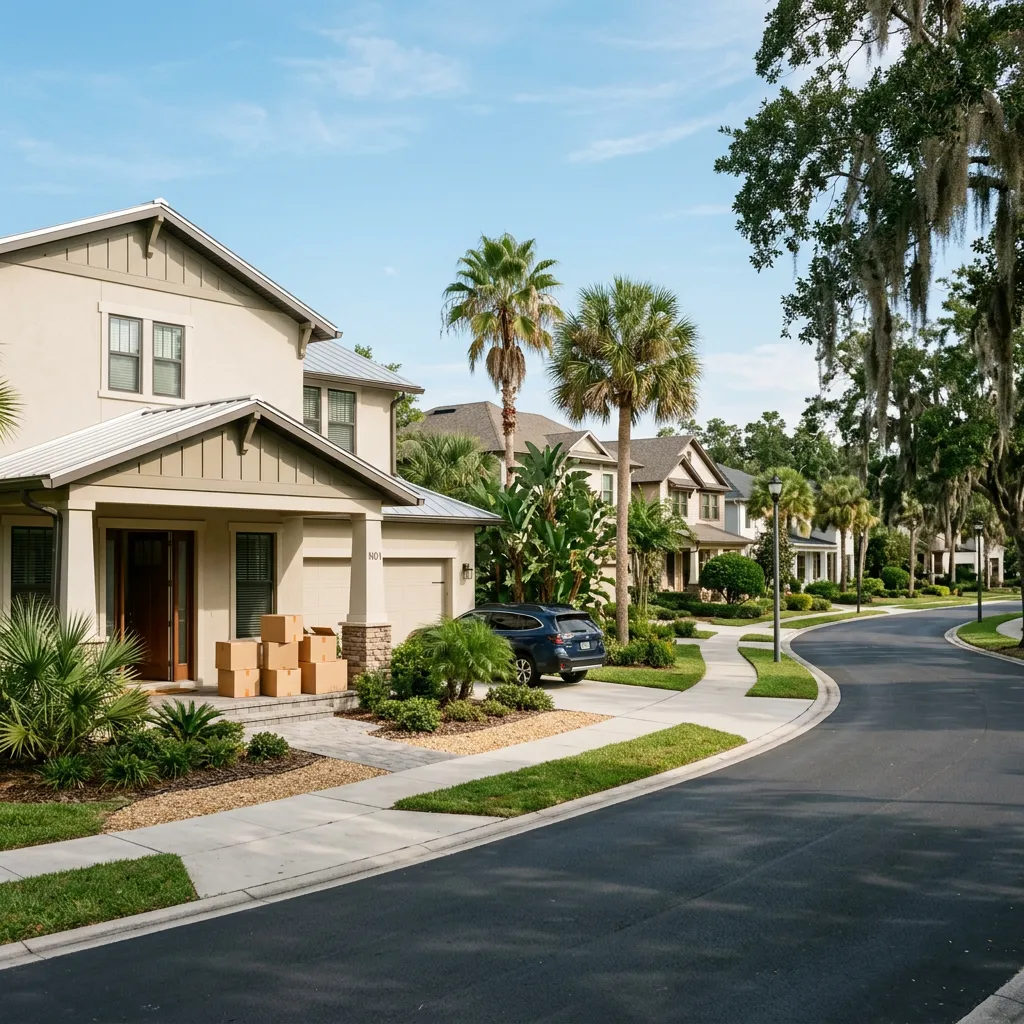
Relocating to Northeast Florida: How to Choose Where to Live
Relocating to Northeast Florida can feel exciting and overwhelming at the same time.
Jacksonville alone covers a large geographic area, and once you add St. Johns County, Clay County, the beaches, St. Augustine, Ponte Vedra, and the growing master-planned communities throughout the region, the number of choices can become difficult to sort through.
That is why I would not start a relocation search by asking, “What is the best neighborhood?”
There is no single best area for everyone.
A much better starting point is figuring out which parts of Northeast Florida actually fit your day-to-day life, budget, commute, housing preferences, and long-term plans.
The goal is to narrow the map before you spend days touring homes that were never going to be the right fit.
Start With Your Daily Life, Not the House
When buyers relocate, it is tempting to start with listings.
You see a beautiful kitchen, a pool, a preserve lot, or a new construction home and immediately imagine living there.
But the house is only one part of the decision.
Before looking seriously at properties, think about what your normal week will look like.
Consider:
Where you will work
How often you will commute
Whether you work from home
Where family members need to be during the week
How often you want to go to the beach
Whether you want easy access to Jacksonville, St. Augustine, or both
How much driving you are comfortable with
Whether you prefer established neighborhoods or newer communities
Whether community amenities matter to you
How important yard size and privacy are
Whether boating or water access is part of your lifestyle
Those answers begin narrowing the region before home features even enter the conversation.
Northeast Florida Is Larger Than It Looks on a Map
One of the most common relocation mistakes is assuming two places that appear relatively close on a map will feel interchangeable in everyday life.
They may not.
A buyer considering Mandarin, Nocatee, SilverLeaf, RiverTown, Ponte Vedra, or the World Golf Village area could be looking at very different driving patterns, community layouts, housing inventory, price ranges, and access to different parts of Northeast Florida.
A 20-mile drive is not always the same 20-minute drive.
Traffic patterns, bridges, interstate access, school traffic, construction, and the direction of your commute can all change how a location feels.
If commuting will be part of your routine, test the actual drive during the time of day you expect to make it.
That is much more useful than relying entirely on an estimated travel time from a map app at 2 p.m. on a Sunday.
Decide Which County Fits Your Priorities
For many relocating buyers, one of the first major decisions is whether to focus on Duval, St. Johns, Clay, or more than one county.
Each offers a different mix of communities, home prices, housing ages, commute options, new construction, taxes, fees, and lifestyle characteristics.
St. Johns County
St. Johns County attracts buyers looking at areas such as Nocatee, Ponte Vedra, SilverLeaf, RiverTown, World Golf Village, and communities surrounding St. Augustine.
The county includes a substantial amount of newer construction and master-planned development, but it also includes established neighborhoods, coastal areas, historic St. Augustine, and more rural options.
Buyers should pay close attention to HOA dues, CDD assessments, insurance, commute patterns, and the total monthly cost when comparing homes.
Duval County
Duval County includes Jacksonville and an enormous variety of housing environments.
A home in Mandarin can feel very different from one near the Beaches, Riverside, the Northside, or other parts of Jacksonville.
Buyers may find established neighborhoods, older homes, infill construction, waterfront properties, suburban communities, condominiums, and newer developments depending on the area.
Because Jacksonville is geographically large, location within Duval County can be particularly important when commute and daily driving are priorities.
Clay County
Clay County can be worth considering for buyers who want another option south and southwest of Jacksonville.
Depending on the area, buyers may find established neighborhoods, newer master-planned communities, larger lots, and different price points than they see in neighboring St. Johns County.
For someone relocating to Northeast Florida, comparing counties side by side can sometimes reveal options that were not initially on the radar.
Do Not Choose a Community Based Only on Someone Else's Recommendation
Relocation buyers often ask friends, coworkers, social media groups, or online forums where they should live.
Those recommendations can be useful, but they are usually based on the other person's priorities.
Someone may love a neighborhood because it is close to their office.
Another person may value the amenity center.
Someone else may have chosen the area because they wanted a larger yard.
None of those reasons necessarily apply to you.
Instead of asking only, “Do people like this community?” ask:
“Why do they like it, and does that matter to me?”
That question produces much more useful information.
Master-Planned Community or Established Neighborhood?
This is one of the biggest lifestyle decisions many Northeast Florida relocation buyers face.
Master-planned communities can offer:
Pools
Fitness centers
Trails
Parks
Playgrounds
Community events
Newer homes
Coordinated landscaping
Recreational facilities
Neighborhood programming
They may also include HOA dues, CDD assessments, smaller lots in some sections, ongoing construction, and community rules.
Established neighborhoods may offer:
Mature landscaping
Larger lots
More architectural variety
Fewer community fees in some areas
More established surroundings
Locations closer to existing shopping or employment centers
They may also come with older roofs, HVAC systems, plumbing, electrical components, windows, or other maintenance considerations.
Neither option is automatically better.
The question is which combination of lifestyle, home age, cost, amenities, and maintenance fits you.
Compare Nocatee, SilverLeaf, RiverTown and World Golf Village Carefully
These names come up frequently for buyers relocating to St. Johns County, but they should not be treated as interchangeable.
Each community or area has its own housing mix, amenities, development pattern, fees, location, and overall feel.
When comparing them, think beyond the model homes.
Look at:
Commute
Home prices
HOA fees
CDD assessments
Lot sizes
Available builders
Resale inventory
Amenities
Distance to everyday shopping
Ongoing construction
Access to major roads
How much of the community is already built out
It is possible to like homes in several communities but strongly prefer the day-to-day experience of one.
That is why community selection should happen alongside the home search rather than after it.
Think About New Construction Early
Relocation buyers are often drawn to new construction because it can simplify some aspects of the move.
Newer systems, builder warranties, modern floor plans, and the possibility of purchasing a completed inventory home can all be appealing.
Builders may also offer financing or closing-cost incentives.
But new construction has its own questions.
You may need to compare:
Builder incentives
Preferred lender requirements
Lot premiums
Construction timelines
Future phases
Included versus upgraded features
Inspection opportunities
Surrounding development
If new construction is something you may consider, include it in the search from the beginning rather than treating it as a completely separate option later.
That makes it easier to compare new and resale homes using the same budget and priorities.
Build Your Budget Around the Total Monthly Cost
A relocation search can go off track quickly if it is based only on purchase price.
Two $500,000 homes can have very different ownership costs.
Your monthly housing expense may include:
Mortgage principal and interest
Property taxes
Homeowners insurance
Flood insurance, when applicable
HOA dues
CDD assessments
Mortgage insurance, if applicable
Then there are maintenance and utility costs beyond the mortgage payment.
A newer home may come with higher community fees but fewer immediate maintenance concerns.
An older home may have lower recurring association costs but require more money for future repairs.
The best budget is the one that reflects what you are actually comfortable spending each month, not simply the maximum purchase price you can qualify for.
Insurance Can Affect Which Homes Make Sense
Florida insurance is something relocation buyers should understand early.
A home's roof, plumbing, electrical system, wind-mitigation features, construction type, flood exposure, age, and claims history can all affect the insurance conversation.
That does not mean you need an insurance quote before looking at your first house.
It means you should understand enough about the issue that a property characteristic does not surprise you after you are already under contract.
If two homes are otherwise similar, insurance and expected maintenance can meaningfully change which one is the better financial fit.
Schools Should Be Researched Property by Property
For buyers who consider school assignment important, verify the information for the specific property rather than assuming an entire community feeds into one school.
Attendance zones can change, new schools can open, and different sections of a larger development may have different assignments.
Use the appropriate school district's official resources to confirm current zoning for a particular address.
Also think beyond test scores or online rankings.
Your priorities may include:
School location
Commute to school
Program availability
Transportation
Before- or after-school needs
Future grade transitions
School information can be an important part of a relocation decision, but it should be verified rather than assumed.
Visit the Areas at Different Times of Day
If possible, do not evaluate an area only during a scheduled afternoon showing.
Drive through in the morning.
See what traffic feels like during rush hour.
Come back around dinner time.
Visit on a weekend.
Look at how people actually use the neighborhood.
Are the trails busy?
Are children using the parks?
Is the area quiet or active?
How much construction traffic is present?
How long does it take to reach groceries, restaurants, medical care, or other places you expect to use regularly?
The house may look exactly the same each time.
Your perception of the location may not.
A Relocation Trip Should Be About Elimination Too
If you are traveling to Northeast Florida specifically to look for homes, the objective does not have to be finding the perfect house immediately.
A successful trip can also eliminate areas.
Maybe you thought you wanted to live closer to St. Augustine but realize the commute is too long.
Maybe you expected to prefer a large amenity-focused community but decide you value a larger private lot more.
Perhaps you assumed you wanted new construction but fall in love with the character and mature landscaping of an established neighborhood.
Those discoveries are valuable.
Every area you confidently eliminate makes your eventual home search more focused.
Do Some Exploring Without Your Real Estate Agent
This may sound unusual coming from a real estate agent, but I think relocation buyers benefit from spending some unstructured time exploring.
After we narrow down potential areas, drive around on your own.
Stop for coffee.
Go to a grocery store.
Take a walk.
Drive from the community to the places you expect to visit regularly.
See whether the location feels natural to you.
A showing appointment tells you about a house.
Spending time in the area tells you more about whether you can imagine living there.
Be Careful With Online "Best Places to Live" Lists
Search results are filled with articles ranking the “best” neighborhoods, suburbs, schools, or communities.
They can give you names to research, but they should not make the decision for you.
The criteria used to create those lists may have very little to do with your priorities.
A community ranked highly because of amenities may not make sense for someone who wants acreage.
An area praised for proximity to downtown Jacksonville may not matter to someone working in St. Augustine.
A neighborhood known for newer construction may not appeal to someone who prefers mature trees and established architecture.
Use lists as research prompts, not answers.
Consider the Home You May Want Five Years From Now
Relocation decisions often focus heavily on what you need immediately.
Also think about how your needs may change.
Consider:
Future work locations
Household changes
Remote-work needs
Aging parents or extended family
Home-office needs
Additional vehicles
Boat or RV storage
Yard maintenance
Stairs
Pool ownership
Resale flexibility
You do not need to predict your entire future.
But thinking a little beyond move-in day can help prevent buying a home that works beautifully for one year and poorly for the next five.
Narrow the Search Before You Narrow the House
A productive relocation strategy usually works from broad to specific.
Start with Northeast Florida.
Then narrow by county.
Then by communities or neighborhoods.
Then by total monthly budget.
Then by property type and home features.
Only after those pieces begin to align does it make sense to obsess over individual listings.
That process may feel slower at the beginning, but it usually makes the actual home search much more efficient.
Instead of touring 20 unrelated homes across three counties, you may discover that your real search is five homes in two communities.
That is progress.
You Do Not Have to Know Northeast Florida Before You Start
Most relocation buyers do not.
That is why the process should include education, not just property showings.
You should understand why one community costs more than another, how the commute changes from different areas, where new construction is occurring, how HOA and CDD fees affect the numbers, and what property characteristics can influence insurance and maintenance.
The goal is not for you to become an expert on every Northeast Florida neighborhood before you move.
It is to learn enough about the areas that matter to you to make a confident decision.
When you narrow the search based on your actual lifestyle, finances, and priorities, finding the home becomes much easier - and you are far more likely to make the right move - not just any move.
Sources: Official community and planning resources from Duval County/City of Jacksonville, St. Johns County, and Clay County; official county school district attendance-zone resources. Community boundaries, school assignments, development plans, fees, and transportation conditions can change and should be verified for the specific property being considered.