
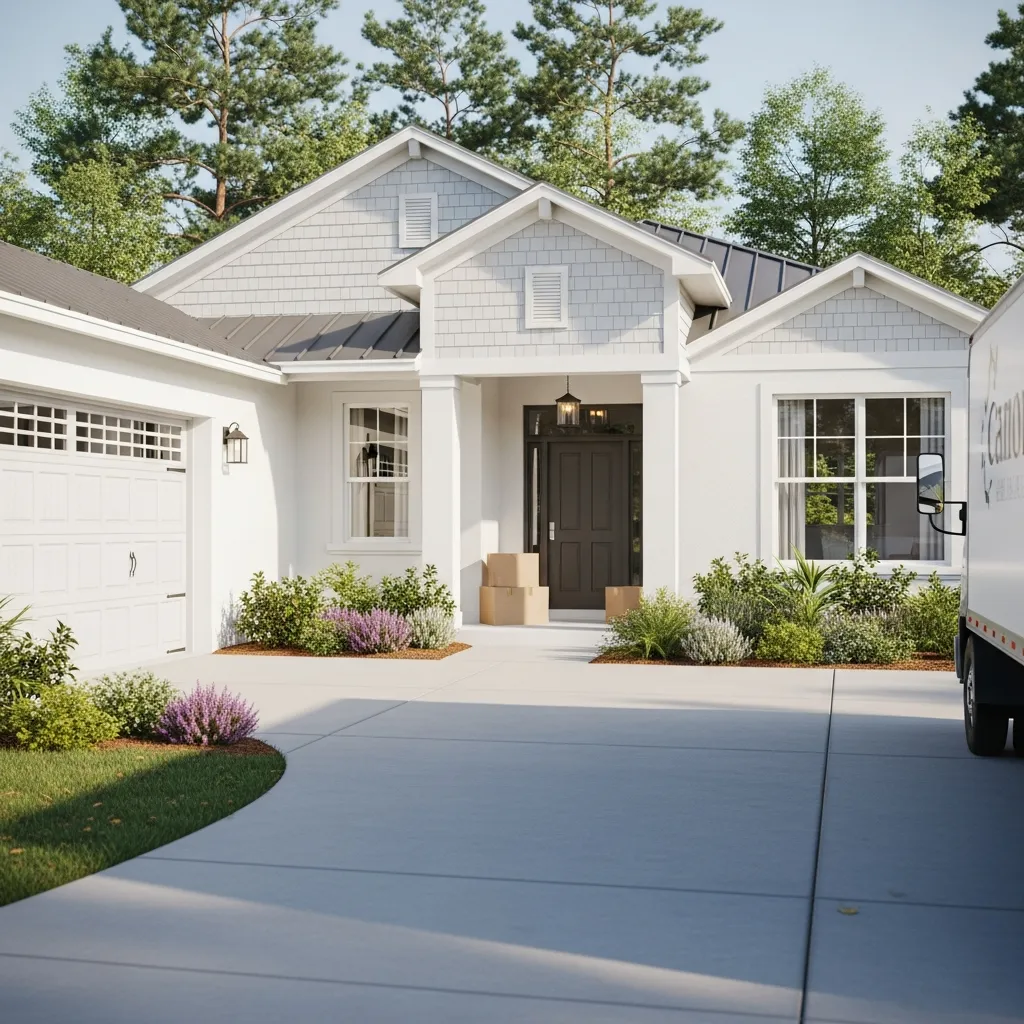
Selling While Buying in Northeast Florida: How to Plan the Move Without Feeling Rushed
Selling one home while buying another can feel overwhelming, especially when timing, money, inspections, appraisals, moving logistics, and family schedules are all connected.
It is one thing to sell a home.
It is another thing to sell a home while also trying to figure out where you are going next.
For many Northeast Florida homeowners, this comes up when they need more space, want a different school or commute, are relocating, downsizing, moving closer to the water, or trying to transition into a home that fits their next stage of life.
The good news is that selling while buying can be managed.
The key is having a clear plan before either side of the move starts moving too fast.
Here is how to think through the process without feeling rushed.
Start with the order of operations
The first question is usually: should I sell first or buy first?
There is no one right answer.
The better question is: which path gives you the best balance of financial comfort, negotiating strength, timing control, and lifestyle stability?
Some homeowners need to sell before buying because they need the equity from the sale for the next purchase. Others may be able to buy first if they have enough savings, income, financing options, or flexibility. Some may use bridge-style strategies, temporary housing, leasebacks, or contingent offers.
The right structure depends on your numbers and your comfort level.
Before making a decision, you need to understand:
How much cash you need for the next purchase
Whether you can qualify before selling
Whether you are comfortable carrying two homes temporarily
How strong your current home is likely to perform
How competitive your target purchase area is
Whether temporary housing is realistic
Whether a leaseback may be possible
How flexible your timeline really is
The timing plan should come before the listing photos, showings, or home search.
Know your numbers before you start touring
Before looking seriously at homes, understand your financial position.
This includes more than an online estimate or a general idea of what your home may be worth.
You need to know:
Estimated sale price range for your current home
Mortgage payoff
Expected net proceeds
Selling costs
Repairs or preparation costs
Cash needed for the next purchase
Loan options
Down payment strategy
Monthly payment comfort zone
Insurance estimates
Taxes, HOA, and CDD fees on the next home
Moving costs
Cushion after closing
This is where many people get stressed. They start looking at homes before they know what they can comfortably do.
When the right home appears, they feel rushed because the numbers are not clear.
A better plan starts with the numbers first.
Understand your current home’s market position
If you need to sell in order to buy, your current home’s market position matters.
Before choosing a strategy, look at:
Recent comparable sales
Active competition
Days on market in your price range
Condition compared to other homes
Buyer demand in your neighborhood
Price reductions nearby
New construction competition
Inspection concerns
Insurance-related concerns
Presentation and photography needs
A home that is likely to sell quickly gives you different options than a home that may need more time.
This is why pricing and preparation matter so much.
If the home is priced too high or not prepared well, it can delay the entire move. If it is positioned correctly, you may have more control and confidence.
Decide how much risk you are comfortable taking
Selling while buying always involves some level of timing risk.
The question is how much risk you are comfortable with.
Some sellers want maximum certainty. They may prefer to sell first, know exactly what they have, and then buy.
Others want to avoid moving twice. They may try to line up the sale and purchase as closely as possible.
Some are willing to make a contingent offer. Others know they need to sell first to be competitive.
There is no perfect option. Each path has trade-offs.
Selling first
Selling first can give you clarity on proceeds and remove the pressure of carrying two homes. But it may require temporary housing or a leaseback if you do not find the next home quickly.
Buying first
Buying first can reduce the pressure of finding a home quickly after selling. But it may require stronger finances, temporary double payments, or a plan if the current home takes longer to sell.
Simultaneous sale and purchase
Closing both around the same time can be convenient, but it requires careful coordination. Inspection issues, appraisal delays, loan timing, or closing delays on either side can affect the entire plan.
Contingent offer
A contingent offer allows you to buy subject to selling your current home, but it may be less attractive to some sellers, especially in competitive situations.
The best path depends on your finances, your current home, your target market, and your tolerance for uncertainty.
Prepare your current home early
If your sale funds your purchase, preparation should start early.
Do not wait until you find the next home to start getting your current home ready. By then, you may feel rushed and make reactive decisions.
Before listing, work through:
Decluttering
Cleaning
Minor repairs
Exterior maintenance
Landscaping
Paint touch-ups
Gathering documents
Reviewing roof, HVAC, and water heater ages
Understanding HOA or CDD details
Preparing for photos
Planning showing logistics
The more prepared your current home is, the faster you can respond if the right buying opportunity appears.
This does not mean you need to list before you are ready. It means you should remove avoidable delays.
Know what you are looking for next
One of the easiest ways to feel rushed is to start the sale process without clarity on the next home.
Before listing, identify:
Target areas
Must-have features
Nice-to-have features
Deal breakers
School or commute needs
Monthly payment ceiling
Lot preferences
HOA or CDD comfort level
Timing needs
Renovation tolerance
Long-term lifestyle goals
This does not mean you need to know the exact home. But you should know enough to move with confidence when the right option appears.
If your search is too broad, you may waste time. If your criteria are too rigid, you may miss good options.
The goal is focused flexibility.
Compare communities before you are under pressure
If you are moving within Northeast Florida, compare communities before your home is active or under contract.
For example, a seller in Mandarin may be considering St. Johns County, World Golf Village, Nocatee, SilverLeaf, Rivertown, or St. Augustine. Each choice may come with different pricing, fees, commute patterns, school zoning, home styles, and inventory.
A buyer moving from one Northeast Florida area to another should understand:
Daily commute
School zoning
HOA fees
CDD fees
Insurance costs
New construction options
Resale inventory
Traffic patterns
Lifestyle differences
Long-term growth
Home condition expectations
Do not wait until your current home is under contract to start comparing these things.
Build in breathing room when possible
A rushed move often happens when there is no cushion.
Whenever possible, build in breathing room around:
Listing preparation
Photography
Showings
Offer negotiation
Inspection period
Appraisal
Loan approval
Repairs
Closing date
Move-out date
Move-in date
Utility transfers
School or work schedules
Sometimes timing has to be tight. But whenever you have the option, avoid stacking every deadline on top of each other.
A few extra days can make the process feel much more manageable.
Leasebacks can be useful in the right situation
A leaseback allows the seller to remain in the home for a period after closing.
This can be useful when you need the proceeds from your sale but need more time to move into your next home.
Leasebacks are not always possible, and they need to be structured carefully. They may depend on the buyer’s loan type, timeline, comfort level, insurance considerations, and agreement terms.
But in the right situation, a leaseback can reduce pressure and give you more time.
If you think you may need one, it should be discussed early so it can be part of the listing and negotiation strategy.
Do not ignore inspection timing
Inspections can affect both sides of a sell-buy move.
On the sale side, the buyer’s inspection may lead to repair requests, credits, or additional negotiations.
On the purchase side, your inspection may uncover issues that affect whether you move forward, renegotiate, or walk away.
When both transactions are happening at the same time, inspection timing matters.
Try to understand:
Inspection deadlines
Repair negotiation timelines
Whether repair credits are allowed
Whether contractors are needed
Whether insurance concerns exist
Whether your purchase depends on your sale
Whether your sale depends on your purchase
This is where a proactive plan can prevent stress.
Appraisal and financing can affect the timeline
Even when both homes are under contract, financing and appraisal timelines can create pressure.
Potential issues may include:
Appraisal delays
Low appraisal
Loan conditions
Document requests
Buyer financing delays
Sale contingency timing
Funds needed from the sale
Wire transfer timing
Closing disclosure deadlines
This is why clear communication between the agents, lender, title company, and parties is so important.
Selling while buying is not just about finding houses. It is about coordinating details.
Avoid making emotional decisions under pressure
When timing feels tight, it is easy to make decisions out of stress.
A seller may accept a weaker offer just to move quickly.
A buyer may overpay for the next home because they are afraid they will have nowhere to go.
A family may compromise too much because they are tired of the process.
A clear plan reduces emotional decision-making.
Before things get busy, decide:
What you are willing to compromise on
What you are not willing to compromise on
What your financial limits are
Whether temporary housing is acceptable
How much uncertainty you can handle
What kind of offer terms you need
When you would rather pause than force the move
The more clarity you have before the pressure hits, the better decisions you can make.
My practical take
Selling while buying in Northeast Florida is very doable, but it should not be treated casually.
The order matters. The numbers matter. The current home’s market position matters. The next home’s availability matters. The timing matters.
The best strategy is the one that gives you enough clarity to move forward without feeling trapped.
Start with your numbers. Understand your home’s likely sale position. Compare your next-home options early. Prepare before you are under pressure. Build in flexibility where possible.
The goal is not just to sell and buy.
The goal is to make the move in a way that feels controlled, realistic, and aligned with your life.
FAQs
Should I sell my home before buying another one?
It depends on your finances, equity, loan options, and comfort level. Selling first can give you clarity, but it may require temporary housing. Buying first may reduce moving pressure, but it requires stronger financial flexibility.
Can I make an offer contingent on selling my home?
Yes, but the strength of a contingent offer depends on the market, the seller, and whether your current home is already listed or under contract. Some sellers are open to contingencies, while others prefer cleaner terms.
What is a leaseback?
A leaseback allows the seller to stay in the home for a set period after closing. It can help create more time between selling and buying, but it must be negotiated and structured carefully.
How do I avoid moving twice?
To avoid moving twice, you may need to coordinate closing dates, negotiate a leaseback, buy first, or align your sale and purchase timelines. Each option has risks and trade-offs.
What should I do first if I need to sell and buy?
Start with your numbers and your current home’s market position. Then compare your next-home options so you know what is realistic before listing.
If you are planning to sell and buy in Northeast Florida, start with the timing strategy before the pressure begins. A clear plan can help you understand your options, prepare your current home, and move toward the next one without feeling rushed.
Source: Local Northeast Florida sell-buy strategy, seller preparation, and buyer planning context as of July 2026.