
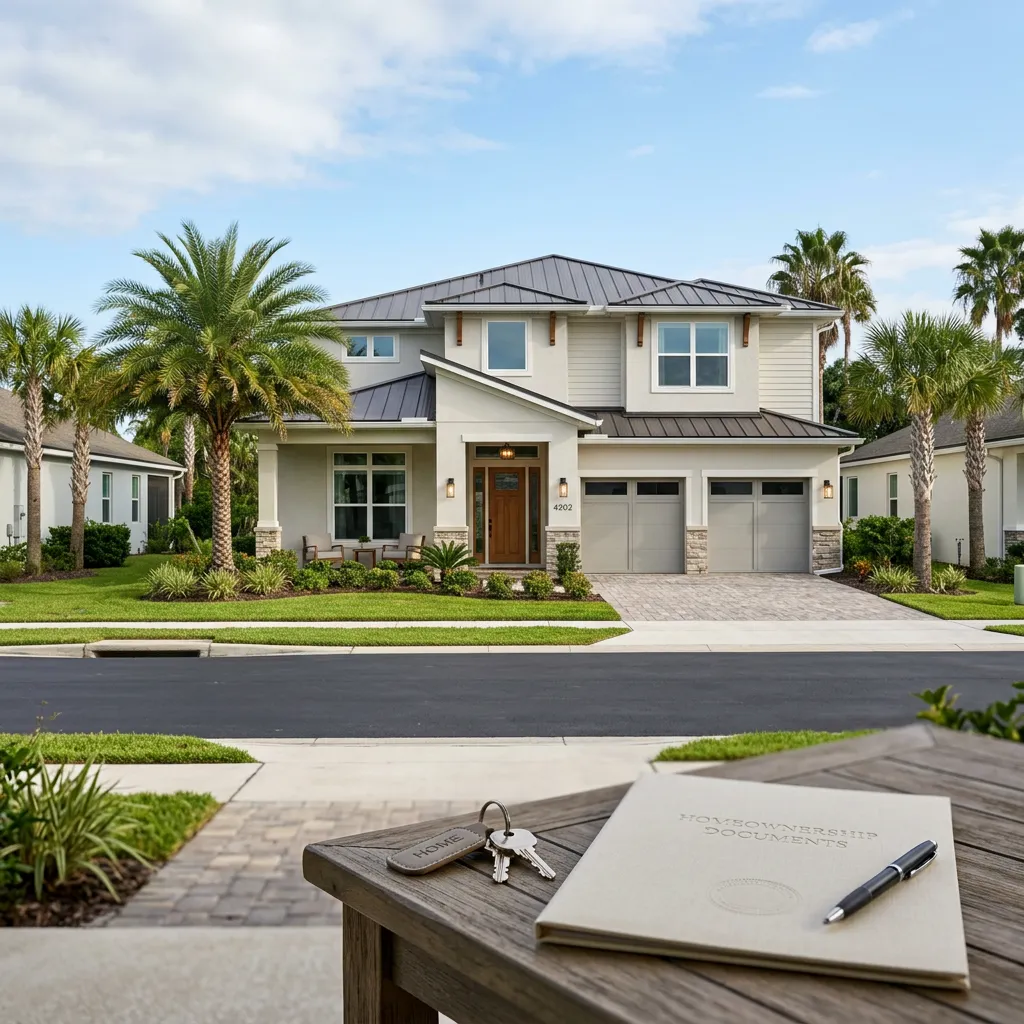
Builder Incentives in Northeast Florida: Are They Really a Good Deal?
Builder incentives can make new construction look extremely attractive.
A lower interest rate. Thousands of dollars toward closing costs. A design-center credit. A reduced price on a quick move-in home. Maybe even a combination of several incentives if you use the builder's preferred lender or title company.
For buyers looking at new construction in Northeast Florida, those offers can represent real savings.
But the largest advertised incentive is not automatically the best deal.
The better question is: What does the incentive actually save you, what are you giving up to receive it, and how does the entire purchase compare with your other options?
That requires looking beyond the promotional number and comparing the home price, financing, cash needed at closing, monthly payment, community fees, lot, upgrades, insurance, taxes, and long-term cost together.
Builder Incentives Are Common in the Current Market
Builders use incentives for a reason.
They may want to move completed inventory, meet sales goals, close homes before a particular date, generate activity in a new phase, or compete with other builders and resale homes nearby.
Nationally, incentives have remained elevated in 2026. In May, the National Association of Home Builders reported that 61% of builders were using sales incentives and 32% had reduced prices, with an average price reduction of 6%. (floridarealtors.org)
That does not mean every builder or community in Northeast Florida will offer the same opportunity.
Incentives can vary by:
Builder
Community
Phase
Floor plan
Specific homesite
Inventory level
Construction stage
Financing
Closing date
Time of month or quarter
Two buyers purchasing from the same builder may even encounter different incentive packages if they are buying different homes or closing at different times.
That is why I would evaluate the specific home rather than assume the advertised promotion applies equally to everything the builder sells.
Start by Identifying What the Incentive Actually Is
“Builder incentive” is a broad term.
The offer could involve:
Closing-cost assistance
Interest-rate incentives
Temporary rate buydowns
Permanent rate buydowns
Price reductions
Design-center credits
Appliance packages
Upgrade allowances
Lot-premium reductions
HOA or other prepaid expenses
Money toward options
A combination of several incentives
Those incentives do not all have the same financial value.
A $20,000 design credit is different from $20,000 toward closing costs.
A temporary mortgage payment subsidy is different from a permanently lower interest rate.
A $15,000 price reduction affects the transaction differently from $15,000 used to reduce your interest rate.
The headline number is only the beginning of the comparison.
Understand the Difference Between a Temporary and Permanent Rate Buydown
Rate incentives deserve particular attention because monthly payment is one of the biggest concerns for many buyers.
A temporary buydown reduces the borrower's payment for an initial period, while the underlying note rate remains higher.
For example, Freddie Mac recognizes temporary subsidy structures where the payment may initially be calculated using a rate below the note rate and then increase in later years until reaching the full note-rate payment. (guide.freddiemac.com)
That can provide valuable short-term payment relief.
But buyers need to understand what happens when the temporary subsidy ends.
Ask to see:
First-year payment
Second-year payment
Payment after the buydown ends
Actual note rate
APR
Total cash required
Whether qualification is based on the temporary or full payment
Do not evaluate affordability based only on the first year's advertised payment.
A permanent rate buydown works differently. Money is used to obtain a lower interest rate that continues for the life of the loan, assuming you keep that mortgage.
That may be more valuable for a buyer expecting to remain in the home and keep the loan for many years.
However, the value also depends on how much it costs to obtain that rate and how long you actually keep the mortgage.
Compare the Builder's Lender With Another Lender
Many builder incentives are tied to using an affiliated or preferred lender.
That does not automatically make the builder's lender a bad option.
In fact, the builder may be able to subsidize financing in a way an outside lender cannot match.
But you still want to understand the comparison.
The Consumer Financial Protection Bureau recommends comparing Loan Estimates because interest rate alone does not tell you the full cost of a mortgage. Points, lender credits, origination charges, closing costs, and cash to close all matter. (consumerfinance.gov)
If the builder offers a significantly reduced rate, compare:
Interest rate
APR
Discount points
Origination fees
Lender credits
Mortgage insurance
Closing costs
Cash to close
Monthly payment
Loan terms
A low advertised rate can be extremely valuable.
You simply want to know what it costs to obtain it and whether another structure would work better for you.
Closing-Cost Assistance Can Preserve Your Cash
Builder-paid closing costs can be particularly valuable for buyers who want to preserve cash after purchasing the home.
Closing costs can include lender charges, title-related expenses, prepaid homeowners insurance, escrow funding, taxes, appraisal costs, and other transaction expenses.
The CFPB notes that credits can reduce the amount a buyer pays upfront, but financing structures should be evaluated carefully because credits and rates can involve tradeoffs. (consumerfinance.gov)
If a builder offers $15,000 toward closing costs, ask:
How much of the credit can I actually use?
Which costs are eligible?
Does it require the preferred lender?
Does it require the builder's title company?
Can unused funds be applied elsewhere?
Does the purchase price change depending on the incentive selected?
An incentive is most valuable when it solves an actual financial need.
If your closing costs are only $9,000 and you cannot use the remaining $6,000, then a “$15,000 incentive” may not provide $15,000 of real value to you.
Do Not Ignore the Purchase Price
Financing incentives can sometimes be so attractive that buyers stop evaluating the actual price of the home.
That is a mistake.
Compare the builder's price with:
Other inventory homes from the same builder
Competing builders
Recent sales within the community
Resale homes nearby
Similar communities
The home's size and features
Lot location
Included upgrades
A low mortgage rate can improve the monthly payment significantly.
But you still own the house at the price you paid.
If you eventually sell, future buyers and appraisers will evaluate the property based on the market at that time, not solely on the financing incentive you received when you purchased it.
The price and the financing both matter.
Quick Move-In Homes Can Be Where the Numbers Get Interesting
One area I would pay particular attention to is completed or nearly completed inventory.
Builders have carrying costs associated with homes they have already built.
A completed home sitting in inventory can create a different incentive environment than a home that has not yet been started.
That may create opportunities involving:
Price reductions
Closing-cost assistance
Financing incentives
Included appliances
Upgrades already installed
Reduced lot premiums
Faster closing
Florida Realtors has noted that builders have increasingly used incentives and price adjustments to make new homes more competitive with resale properties. (floridarealtors.org)
For a buyer who does not need to select every finish personally, a quick move-in home can sometimes offer a compelling combination of newer construction and stronger financial incentives.
Design Credits Are Only Valuable if You Wanted the Upgrades Anyway
A builder may offer money toward design-center selections.
That can sound exciting.
But an upgrade credit has the most value when it pays for features you already planned to select.
It is easy to walk into a design center with a $20,000 credit and leave having spent $35,000 more than expected.
Before selecting upgrades, separate them into categories:
Structural or difficult to change later
Additional windows
Extended lanai
Garage configuration
Electrical additions
Plumbing changes
Certain layout modifications
Useful upgrades
Flooring
Cabinets
Countertops
Lighting
Appliances
Mostly cosmetic and easier to change later
Paint
Decorative fixtures
Certain hardware
Some backsplash choices
Ask yourself whether you would spend your own money on the upgrade if the builder were not offering a credit.
That can help keep the incentive from becoming a reason to increase the overall purchase price.
Lot Premiums Can Quietly Change the Deal
A builder may advertise a floor plan at one price, but the homesite you actually want could carry a substantial lot premium.
That premium might be associated with:
Preserve views
Water views
Cul-de-sac location
Larger lot
Corner lot
Reduced rear neighbors
Premium orientation
Particular community sections
The lot may absolutely be worth the additional cost to you.
But include it when evaluating the incentive.
A $20,000 builder credit does not feel quite as large if the lot you select adds $35,000 to the price.
At the same time, I would not automatically choose the least expensive lot just to maximize the perceived discount.
Lot location can have a major effect on how much you enjoy the property and potentially how buyers perceive it when you sell.
HOA and CDD Costs Still Count
Builder incentives do not eliminate recurring community expenses.
Many newer Northeast Florida communities have HOA dues, CDD assessments, or both.
Those expenses can meaningfully affect your monthly or annual cost of ownership.
When comparing a builder's payment estimate with a resale home, make sure the calculation includes:
Principal and interest
Property taxes
Homeowners insurance
Flood insurance, when applicable
HOA dues
CDD assessments
Mortgage insurance, if applicable
A builder may be able to reduce your mortgage rate substantially.
That is valuable.
But you still want to know what the complete monthly housing expense looks like.
Be Careful With Property Tax Estimates on New Construction
Property taxes can surprise new-construction buyers.
A newly developed lot may initially show a tax bill based largely on the land before the completed home is reflected in the assessed value.
That historical tax amount is not necessarily a good estimate of what the buyer will eventually pay once the completed property is assessed.
When building your budget, use a realistic estimate based on the expected completed property rather than assuming the previous tax bill represents your future taxes.
This becomes especially important when the builder's advertised monthly payment focuses heavily on principal and interest.
Your real housing budget needs the rest of the picture.
Insurance Should Be Part of the Comparison Too
New construction can have advantages from an insurance standpoint because the home generally has newer systems and is built under more current building requirements.
That does not mean you should assume the insurance premium.
Get a quote for the actual home.
Factors can include:
Location
Construction type
Wind-mitigation features
Roof
Flood exposure
Replacement cost
Deductible
Coverage selections
If you are comparing a new home and a resale home, actual insurance estimates can change the affordability comparison.
The resale home may cost less to purchase while costing more to insure.
Or the difference may be relatively small.
You need the numbers for the specific properties.
Do Not Forget the Cost of Things the Model Home Already Has
Model homes are designed to look impressive.
They may contain upgrades that are not included in the advertised base price.
When walking through a model, ask which features are standard and which are upgrades.
Pay attention to:
Flooring
Cabinets
Countertops
Appliances
Lighting
Trim
Ceiling details
Outdoor living areas
Landscaping
Window treatments
Built-ins
Garage finishes
Smart-home features
The house you fall in love with in the model may not represent what you receive at the advertised starting price.
That does not mean the builder is doing anything wrong.
It means buyers need to distinguish the base home from the showcased version.
The Best Incentive May Depend on How Long You Expect to Own the Home
Imagine a builder gives you several options:
Lower purchase price
Closing-cost credit
Temporary rate buydown
Permanent rate reduction
Which one is best?
There is no universal answer.
If cash to close is your biggest constraint, closing-cost assistance may be particularly valuable.
If you expect to own the home for many years and keep the mortgage, a permanent rate reduction may have significant long-term value.
If you expect income to rise but want payment relief during the first couple of years, a temporary buydown may appeal to you.
If you expect to pay cash or refinance relatively soon, the purchase price may matter more.
The CFPB recommends comparing the cost of mortgage points and credits over different time horizons rather than focusing only on the immediate payment. (consumerfinance.gov)
Your timeline matters.
A Lower Rate Does Not Automatically Mean You Should Spend More
This is an easy trap.
A financing incentive reduces the monthly payment, which can increase the amount a buyer qualifies to borrow.
That does not mean you should automatically increase your purchase price.
There is a difference between what you can qualify for and what you are comfortable paying.
Think about your complete financial life.
A home budget should leave room for:
Maintenance
Utilities
Furnishings
Emergency savings
Transportation
Travel
Childcare
Retirement savings
Other financial goals
An incentive should improve the economics of a home you can comfortably afford.
It should not become the justification for stretching beyond the budget you originally established.
Builder Contracts Are Different From Resale Contracts
New construction transactions commonly involve builder-specific contracts.
Those agreements can be very different from the contracts buyers encounter when purchasing a resale home.
They may address:
Construction timelines
Delays
Deposits
Financing
Inspections
Change orders
Design selections
Builder warranties
Closing requirements
Default provisions
Incentive requirements
Do not assume the process works exactly like a resale purchase.
Understand the agreement you are signing and ask questions when something is unclear.
The Builder's Sales Team Represents the Builder
The model-home sales team can be extremely knowledgeable about the builder and community.
Their job, however, is to sell homes for the builder.
A buyer can have their own real estate representation to help compare communities, evaluate competing homes, analyze incentives, coordinate inspections, and look at the transaction from the buyer's perspective.
Ideally, make that decision before your first builder visit or online registration, because builder policies regarding outside real estate representation can vary.
That allows the buyer's agent to be involved from the beginning rather than after the buyer has already selected the home and financing package.
New Construction Should Still Be Inspected
An incentive package does not change the importance of inspecting the actual house.
New homes involve many trades and multiple phases of construction.
Depending on when you purchase, buyers may consider inspections at different stages as well as before closing.
The objective is not to assume something is wrong because the home is new.
It is to independently understand what you are purchasing.
A strong financing incentive is not a substitute for due diligence.
Compare the Incentive Against a Resale Home
Sometimes the best way to understand whether a builder's offer is compelling is to compare it directly with a resale property.
Imagine:
New Construction
$525,000 purchase price
Builder financing incentive
Closing-cost contribution
HOA and CDD
Brand-new roof, HVAC, plumbing, electrical, and appliances
Resale
$500,000 purchase price
Standard market financing
Potential seller concession
Lower community fees
10-year-old roof and HVAC
Which is the better deal?
You cannot answer based only on the $25,000 difference in price.
You would need to calculate:
Cash to close
Monthly payment
Insurance
Taxes
HOA/CDD
Expected maintenance
Immediate repairs
Financing cost
Long-term ownership plans
That is why I prefer comparing the entire financial picture rather than saying new construction or resale is automatically cheaper.
Ask the Builder What Happens if You Do Not Take the Incentive
This can be a very useful question.
If the builder offers $25,000 in incentives, ask what the transaction looks like without that package.
Can any of the incentive be exchanged for a price reduction?
Can you use your own lender?
Does the purchase price change?
Are some incentives tied only to particular inventory homes?
Does the incentive require a specific closing date?
Can the incentive be used for upgrades instead?
Not every builder will structure the options the same way.
But knowing the alternatives makes the value easier to measure.
Get the Incentive in Writing
Do not rely solely on a conversation in the model home.
If an incentive affects your decision, make sure the applicable terms are reflected in the appropriate written agreement or addendum.
Understand:
Dollar amount
Eligible uses
Expiration
Financing requirements
Closing deadline
Home eligibility
Lender requirements
Title requirements
Other conditions
Builder promotions can change.
The offer you saw online last week may not necessarily be the offer available on the home you choose today.
When Is a Builder Incentive Actually a Good Deal?
A builder incentive becomes a good deal when it improves the overall transaction for you.
That usually means asking:
Does it lower my actual monthly cost?
Does it reduce the cash I need to close?
Am I paying more for the house to receive it?
Is the financing competitive after I compare rate, APR, fees, and points?
Would I have purchased these upgrades anyway?
What happens after a temporary rate buydown expires?
How do HOA and CDD costs affect the payment?
What will realistic property taxes and insurance look like?
How does this home compare with resale properties and other builders?
Do I actually want this house and lot, or am I being attracted primarily by the incentive?
The incentive should strengthen a good purchase.
It should not be the reason you overlook a home, location, lot, community, or payment that otherwise does not work for you.
Look at the Deal From Every Direction
Builder incentives are one of the reasons new construction deserves serious consideration in the current Northeast Florida market.
They can reduce borrowing costs, preserve cash, make a newer home more affordable, and sometimes change the comparison between new construction and resale entirely.
But the advertised incentive is only one line in a much larger equation.
Look at the home.
Look at the lot.
Look at the community.
Look at the fees.
Look at the insurance and taxes.
Look at the financing.
Look at what the incentive is actually worth to you.
When all of those pieces make sense together, the incentive can help you make the right move - not just any move.
Sources: Consumer Financial Protection Bureau, mortgage Loan Estimate, closing-cost, points and lender-credit resources; Freddie Mac Single-Family Seller/Servicer Guide, temporary subsidy buydown plans; Florida Realtors reporting on 2026 National Association of Home Builders incentive and pricing data. Builder promotions, financing programs and incentives vary by builder, community, property, lender and closing date and should be verified for the specific home being considered.