
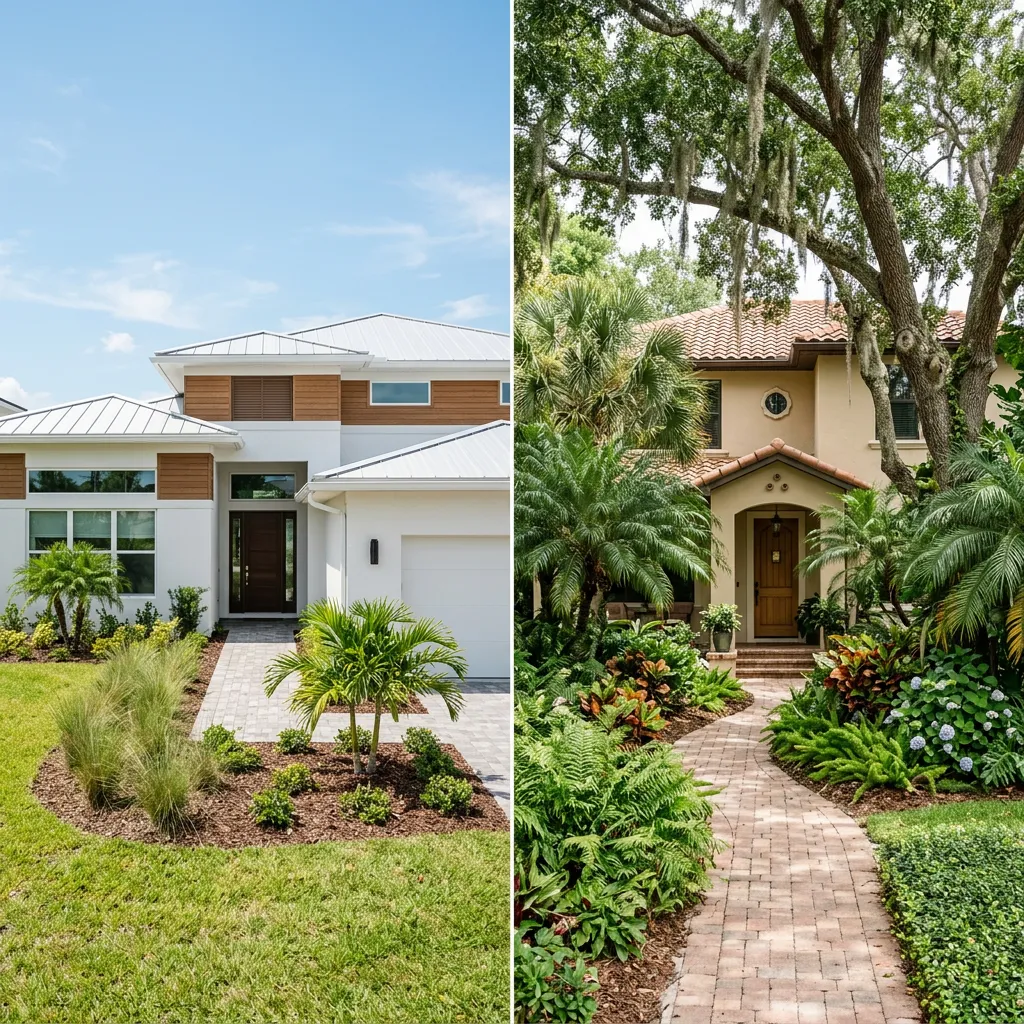
New Construction vs. Resale in Northeast Florida
One of the first decisions many Northeast Florida buyers face is whether to focus on new construction, resale homes, or both.
At first, the choice can seem straightforward. New construction offers a brand-new home, current finishes, and newer systems. Resale homes may offer established neighborhoods, mature landscaping, larger lots, or locations where new construction is limited.
But the real comparison goes much deeper than new versus old.
Two homes with similar purchase prices can have very different monthly costs, insurance considerations, maintenance needs, community fees, incentives, timelines, and long-term expenses. The right choice depends on how all of those pieces fit together.
If you are deciding between new construction and resale in Northeast Florida, here are the factors worth comparing before narrowing your search.
Compare the Total Cost, Not Just the Purchase Price
The asking price is only one part of what a home will cost you.
When comparing properties, buyers should look at the entire financial picture, including:
Property taxes
Homeowners insurance
HOA dues
CDD assessments
Flood insurance, when applicable
Expected maintenance
Major systems and their remaining useful life
Financing terms
Closing costs
Builder incentives or seller concessions
This is especially important in Northeast Florida because a newer home in a master-planned community may have HOA and CDD expenses that an older resale home does not.
At the same time, an older home without those fees could have a roof, HVAC system, plumbing, windows, or other components that will eventually need replacement.
A lower purchase price does not automatically mean a lower cost of ownership.
The better comparison is what each property is likely to cost you now and over the years you expect to own it.
Builder Incentives Can Be Valuable, but Look at the Whole Deal
One of the biggest attractions of new construction can be builder incentives.
Depending on the builder and community, incentives may include assistance with closing costs, financing incentives, interest-rate programs, upgrades, or other credits.
Those incentives can absolutely have value, but they should not be evaluated by themselves.
For example, a financing incentive may look attractive, but buyers should still compare:
The home's actual purchase price
The interest rate and loan terms
Any required use of the builder's preferred lender
Closing costs
Lot premiums
Included versus upgraded features
HOA and CDD expenses
Competing resale options
Sometimes a builder incentive creates meaningful savings. Other times, the numbers may simply be structured differently.
The goal is to compare the entire transaction rather than choosing a home because the advertised incentive sounds impressive.
Resale Homes May Offer More Negotiating Opportunities
With a resale home, the transaction involves an individual seller rather than a builder operating within a larger pricing strategy.
That can create different negotiating opportunities.
Depending on the property and current market conditions, negotiations may involve:
Purchase price
Closing-cost assistance
Repair requests
Credits
Closing date
Personal property
Other contract terms
Every property and seller is different, so negotiation should be based on the specific situation rather than assuming every resale home will be heavily negotiable.
Builders negotiate differently. They often have broader pricing considerations because reducing the recorded sale price of one home can affect future sales and comparable values within the community.
As a result, builders may sometimes be more willing to offer financing incentives, closing-cost assistance, or upgrades than a significant reduction in the base purchase price.
Understanding where the flexibility exists can matter just as much as knowing how much flexibility exists.
New Does Not Mean Maintenance-Free
A new home generally gives buyers newer components and fewer immediate age-related replacement concerns.
That can be a meaningful advantage.
A brand-new roof, HVAC system, water heater, plumbing, and electrical system provide a very different maintenance outlook than purchasing a home where several major components are already well into their expected life.
But new construction is not maintenance-free.
Homes still require routine upkeep, and new communities can come with their own considerations. Landscaping may still be getting established. Nearby lots may remain under construction. Roads, amenities, and commercial areas may still be developing.
You should also understand what the builder warranty covers, for how long, and what responsibilities remain with the homeowner.
The question is not whether a new home will ever require maintenance. It is whether the newer systems and expected maintenance schedule fit your priorities.
With Resale, Pay Attention to the Expensive Things You Cannot See in Listing Photos
Resale homes can offer tremendous value, particularly when the property has been well maintained or major systems have already been updated.
But buyers should look beyond cosmetic improvements.
Fresh paint, new flooring, updated light fixtures, and attractive countertops are easy to notice. The more expensive components may require closer attention.
Consider the condition and age of:
Roof
HVAC
Electrical panel and wiring
Plumbing
Water heater
Windows and doors
Exterior cladding
Appliances
Drainage
Structural components
This does not mean an older component automatically makes a house a poor choice.
It means the condition of those components should be part of the price and ownership-cost conversation.
A well-maintained resale home with older finishes may sometimes represent a stronger value than a beautifully updated home with major systems nearing replacement.
Insurance Can Change the Comparison
Florida homeowners insurance deserves attention early in the buying process, particularly when comparing homes of different ages.
Roof age and condition, electrical systems, plumbing, wind-mitigation features, construction type, flood exposure, and other property characteristics can affect insurance options and cost.
That can make the new-versus-resale comparison more complicated than it initially appears.
A resale home may have a lower purchase price but higher insurance costs. Another resale property may have already received important updates that make the insurance picture much more favorable.
Likewise, newer construction can benefit from current building standards and newer systems, but buyers still need to obtain actual insurance quotes rather than assume what the premium will be.
Insurance is part of the affordability calculation, not an afterthought.
Community Fees Can Change the Monthly Payment
Many of Northeast Florida's newer communities offer amenities such as pools, clubhouses, trails, fitness facilities, parks, playgrounds, and community programming.
Those amenities can be a major part of why buyers choose the community.
They also have a cost.
Before comparing a new-construction home with a resale property elsewhere, understand whether each property includes:
HOA dues
CDD assessments
Special assessments
Amenity fees
Other community-specific expenses
Some resale homes are also located within HOA and CDD communities, so this is not exclusively a new-construction issue.
The important thing is to compare the full monthly obligation.
If you are deciding among communities such as Nocatee, SilverLeaf, RiverTown, World Golf Village, or other growing areas of Northeast Florida, community structure can be just as important as the house itself.
Consider the Lot, Not Just the Floor Plan
This can be easy to overlook when touring model homes.
A model is designed to showcase the home at its best. Your actual lot may have different characteristics.
With new construction, consider:
Lot size
Lot premium
Rear neighbors
Preserve or water views
Retention ponds
Road location
Future phases
Nearby construction
Sun exposure
Drainage
Easements
A resale home allows you to see the established property as it exists today.
You can see the mature landscaping, surrounding homes, traffic patterns, drainage, neighboring properties, and what is behind the backyard.
Neither situation is inherently better, but they provide buyers with different levels of certainty about the immediate surroundings.
Think About Timing
New construction can involve very different timelines.
Some buyers purchase a completed inventory home and close relatively quickly. Others select a home that is already under construction. A build-from-the-ground-up purchase can take considerably longer and may involve design selections, construction milestones, inspections, and changing completion estimates.
Resale homes usually offer a more defined closing timeline.
Your own situation matters.
If you need to move by a certain date, sell another property, coordinate a lease, relocate for work, or align your purchase with the school year, timing can influence which option makes sense.
A home may check every box and still be the wrong fit if the timeline does not work.
Do Not Skip an Inspection Because the Home Is Brand New
New construction sometimes creates the impression that an independent inspection is unnecessary.
A new home may have undergone builder inspections and municipal inspections, but buyers can still choose to have their own independent inspection performed.
Construction involves many different trades, materials, and stages of work. An independent inspection gives the buyer another opportunity to understand the condition of the property before closing.
Depending on the stage of construction, buyers may also consider inspections at different points in the building process.
For resale homes, inspections are equally important because they can provide valuable information about existing systems, deferred maintenance, repairs, and potential future costs.
The purpose is not to find a perfect home.
It is to understand what you are buying.
New Construction Contracts Are Different
Another important distinction is the contract itself.
Builders typically use their own purchase agreements, which can be substantially different from the contracts buyers may encounter in a resale transaction.
The builder's sales representative represents the builder's interests.
Buyers can have their own real estate representation to help them understand the process, evaluate the property and community, compare incentives, coordinate inspections, and keep track of important decisions throughout the transaction.
It is especially helpful to understand this before your first visit to a model home rather than after you have already registered or begun working directly with the builder.
Resale May Offer Locations New Construction Cannot
Location can ultimately make the decision for you.
Some established Northeast Florida neighborhoods simply do not have significant new-construction inventory.
If your priority is a particular commute, proximity to the beach, mature trees, a larger lot, an established neighborhood, or a specific part of Jacksonville or St. Augustine, resale may provide more choices.
If your priority is a newer master-planned community, modern floor plan, extensive amenities, or selecting certain finishes, new construction may offer more options.
Instead of deciding that you are only willing to buy new or only willing to buy resale, it can be useful to compare both if your location and budget allow it.
You may discover that the features you thought mattered most change once you see the tradeoffs in person.
Compare What You Are Getting for the Money
A productive comparison is not simply:
“Which home costs less?”
It is:
“What am I getting for what I am spending?”
One property may provide newer systems, builder warranties, and modern design but have a smaller lot and higher community fees.
Another may offer more land, an established location, and lower fees but require future updates.
One buyer may gladly accept higher community costs in exchange for amenities and newer construction. Another may prioritize privacy, lot size, or the ability to renovate over time.
There is no universal answer.
There is only the combination that makes the most sense for your priorities, finances, and long-term plans.
Make the Comparison Before You Fall in Love With the House
The easiest time to compare new construction and resale objectively is before you become attached to a specific property.
Once you love the kitchen, the view, the floor plan, or the model home, it becomes much harder to focus on numbers and tradeoffs.
Start by determining what matters most to you.
Then compare homes based on:
Total monthly cost
Cash needed to close
Insurance
Community fees
Condition
Expected maintenance
Location
Lot
Amenities
Timeline
Future expenses
Long-term fit
New construction and resale can both be excellent options in Northeast Florida.
The goal is not to choose one because it sounds better on paper.
It is to understand what you are buying, what you are paying for, and which set of tradeoffs makes the most sense for you.
That is how you make the right move - not just any move.